
How Does Siding Impact a Home’s Energy Efficiency?
Siding plays a major role in your home’s energy efficiency by helping regulate heat flow, reducing air leaks, and supporting insulation within the building envelope. The right siding system, paired with proper installation, can lower energy bills, improve indoor comfort, and protect your home year-round.
Why Rising Energy Bills May Be a Siding Problem
If your energy bills have been creeping up, your siding might be the silent culprit. While siding is often viewed as a cosmetic upgrade, it is a critical part of your home’s exterior envelope. Gaps, aging materials, or poorly insulated siding systems allow heat to escape in winter and enter in summer.
In Minnesota’s climate, where homes endure extreme temperature swings, siding performance directly affects comfort and efficiency. Wright at Home Roofing & Exteriors helps homeowners choose siding solutions that do more than look good. The goal is to improve insulation, seal the home properly, and support long-term energy performance.
What Energy Efficiency Really Means for Your Home
When it comes to siding, energy efficiency is about how well your home resists heat transfer and air movement.
Key concepts homeowners should understand include:
- R-value, which measures how well materials resist heat flow
- Thermal performance, or how the full siding system manages temperature changes
- Air infiltration, where small gaps allow conditioned air to escape
- The building envelope, which includes siding, insulation, house wrap, and sealing details
Together, these elements determine how efficiently your home maintains comfortable indoor temperatures.

How Different Siding Materials Perform
Not all siding materials contribute equally to energy efficiency. Performance depends on both the material itself and what is installed behind it.
Vinyl Siding
- Provides minimal insulation on its own
- Performance improves significantly when paired with foam backing or rigid insulation
- Common choice for Minnesota homes when properly installed
Fiber Cement Siding
- Extremely durable, but has a low inherent R-value
- Relies on insulation layers behind the siding for efficiency
- Fire resistance can offer indirect financial benefits through insurance
Engineered Wood Siding
- Offers moderate insulation value compared to fiber cement
- Performs well when paired with rigid foam board
- Expands and contracts less than traditional wood, helping maintain tighter seals
Insulated Vinyl Siding
- Designed specifically for energy performance
- Foam-backed panels create a thermal break and reduce air leakage
- Often improves comfort and sound reduction in addition to efficiency
Why Proper Installation Matters More Than Material
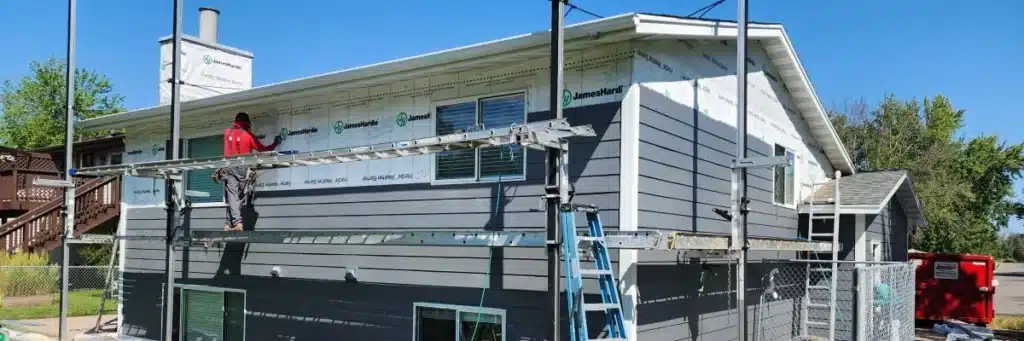
Even the most energy-efficient siding product can underperform if it is installed incorrectly. Small gaps, poor flashing, or missing house wrap can undermine the entire system.
Key installation details that affect efficiency include:
- Continuous house wrap and air barriers
- Proper flashing around windows and doors
- Tight seams and sealed penetrations
Choosing an experienced siding contractor is just as important as selecting the material itself.
Signs Your Current Siding Is Increasing Energy Costs
Your siding may be hurting efficiency if you notice:
- Cold drafts near exterior walls
- Walls that feel hot to the touch in summer
- Rising heating and cooling bills
- Ice dams form along the roof edges in winter
These issues are common in Minneapolis-area homes with aging vinyl siding, damaged trim, or failed insulation layers.
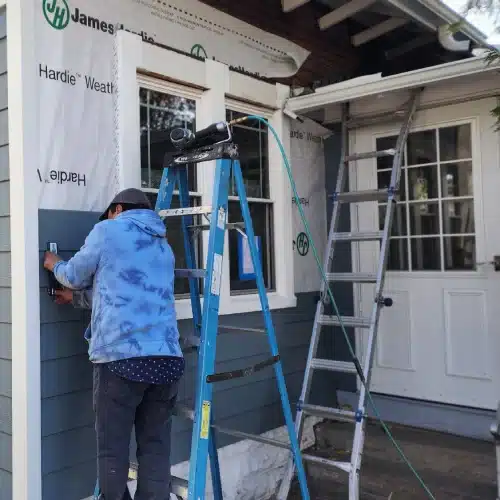
How to Improve Energy Efficiency During a Siding Upgrade
A siding replacement is an opportunity to improve more than curb appeal.
Efficiency upgrades often include:
- Adding rigid foam board or upgraded house wrap
- Sealing joints, edges, and penetrations
- Coordinating siding replacement with window upgrades
These improvements can lead to lower utility bills, improved comfort, and increased resale value.
Is Energy-Efficient Siding Worth the Investment?
For many homeowners, yes. Studies show that improving exterior insulation and air sealing can reduce heating and cooling costs by 10 to 20 percent.
Beyond monthly savings, energy-efficient siding offers:
- More consistent indoor temperatures
- Reduced noise from outside
- Long-term durability and home value
For additional guidance, homeowners can reference resources from EnergyStar.gov, which outlines how exterior improvements affect residential energy performance.
FAQs About Siding and Energy Efficiency
Does siding improve energy efficiency?
Yes. While siding alone does not insulate a home, a complete siding system that includes insulation and proper sealing can significantly reduce energy loss.
What is the most energy-efficient siding option?
Insulated vinyl siding and siding systems paired with rigid foam insulation typically offer the best energy performance.
Is insulated siding worth the cost?
For many homeowners, insulated siding pays off through lower energy bills, improved comfort, and long-term durability.
Get a Free Siding Energy Assessment
If you are concerned about energy loss or planning a siding upgrade, a professional evaluation can provide clarity. Wright at Home Roofing & Exteriors offers siding inspections designed for Minnesota homes and weather conditions.
A proper assessment helps identify where efficiency is being lost and what improvements make the most sense for your home.
Schedule a siding consultation to understand how your exterior impacts comfort, efficiency, and long-term performance.